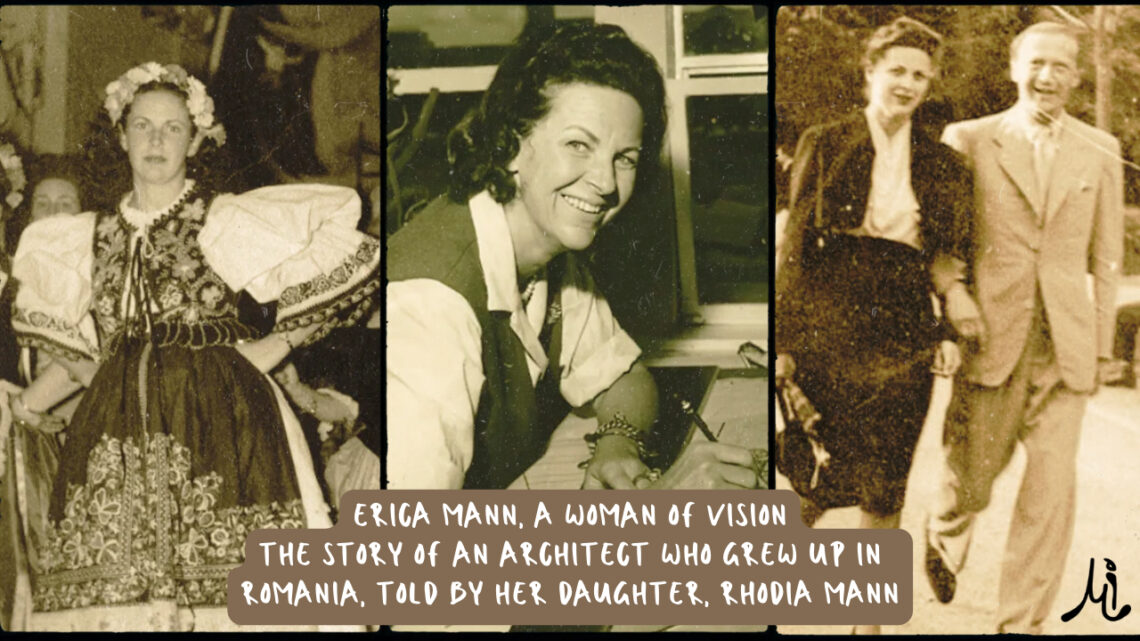
Erica Mann, the Romanian Architect Who Helped Shape Nairobi
Timpul estimat pentru citirea acestui articol este de 43 minute.
When I first arrived in Nairobi in December 2019, I discovered a city of contrasts: imposing buildings and impoverished outskirts, attractive residential developments alongside modest workers’ housing and industrial buildings. It was a city with a life of its own, shaped by the people moving through it day and night, amid a constant hum that never seemed to fade.
It was only six years later that I would learn that a Romanian woman had played a significant part in Nairobi’s transformation in the years before Kenya gained independence from British rule. Her name was Erica Mann, an architect from Romania who, in the early 1940s, fled her homeland with her husband, veterinary surgeon Igor Mann, to escape the growing tide of hatred and persecution directed, among others, at Romania’s Jewish population.
In 1948, Erica joined Nairobi’s town planning department, where she worked alongside other specialists on the city’s master plan.
I did not come across Erica’s story by chance, through a simple Google search or a question put to an AI chatbot. Far from it. I first heard about Erica Mann from my friend Andrei Mihalca, on the very same day that he told me about her daughter, Rhodia Mann, whom he had known for many years.
“You know Rhodia, don’t you?” I remember him asking when we first met in Nairobi. “Hmm, unfortunately, I don’t,” I admitted, somewhat sheepishly, as I had genuinely never heard of her.
“You must meet her. She’s a fascinating person, an expert on the history of the Samburu people, and her parents were Jewish refugees who fled Romania during the Second World War…”
And so I came to know Rhodia first indirectly, through Andrei’s stories, and then in person, at the end of December 2025.
I met her in her home, which could easily be described as a small museum dedicated to the Samburu people, though its collections extend well beyond them. Over the years, Rhodia has gathered numerous artefacts from different regions and communities across Kenya. I found her warm, welcoming and eager to share her many interests with us: the Samburu people, gemstones and the history of African communities.
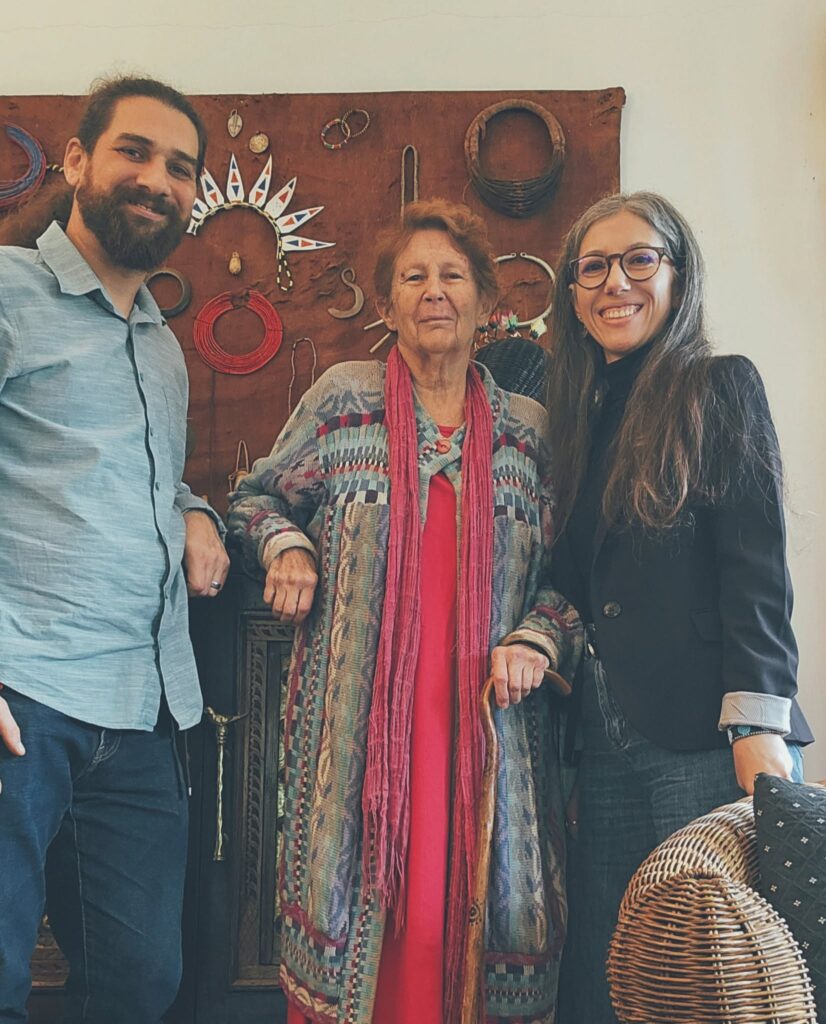
I shall resist the temptation to tell you more about Rhodia here, as I intend to devote a separate article to her. The following pages are about her mother, Erica Mann, and the courage of a young woman who found herself building a life thousands of kilometres from home. They tell the story of a woman who fled the horrors of a merciless war alongside the man she loved and went on to make her mark in a part of the world that faced considerable challenges of its own.
When Erica and Igor Mann arrived in 1942, Kenya was not yet an independent African nation. It was a British colony in which Europeans held most of the political and economic power, despite representing only a small minority of the population. Meanwhile, political movements were beginning to gather momentum within Kenyan society, setting the stage for the country’s independence just over two decades later.
Erica Mann: Between History and Memory — A Remarkable Woman Remembered by Her Daughter
Sometimes, the story of a life only truly comes into focus when someone begins piecing together its fragments. For Rhodia Mann, the full extent of her mother’s remarkable life became apparent only after Erica’s death, as she explored the family archives. Old photographs, sketches, documents and memories gradually revealed the portrait of a woman who had lived through war, exile and cultural upheaval before building a new life in Africa.
In a documentary recently published on YouTube, dedicated to Erica Mann’s life, Rhodia retraces her mother’s journey not only as a daughter who had always known her as a woman devoted to her work, but also as someone who, looking back, was discovering the true extent of both her personal and professional legacy.
“My name is Rhodia Mann, and I’m here to tell you the story of my mother, Erica Mann.”
With these words, Rhodia Mann begins her account of her mother’s life. She had always known Erica as a woman deeply committed to her work. It was only after her mother’s death, when she had the opportunity to explore the family archives, that Rhodia realised the true extent of her achievements.
“I always knew that my mother was a working woman, but it was only after her death, when I was able to go through all the family archives, that I realised just how extraordinary she really was.”
Austrian Roots and a Childhood in Romania
Erica Mann was born in 1917 into a family of Austrian origin. Her parents, Emma and Jakob, came from the cultural milieu of the Austro-Hungarian Empire and later settled in Romania. Rhodia admits that she does not know exactly why her grandparents chose to move there. Despite her Austrian ancestry, Erica always considered herself Romanian.
“She spoke Romanian fluently, she thought in Romanian, she counted in Romanian. And her passport was Romanian,” Rhodia recalls.
Erica’s mother, Emma, came from a wealthy and respected middle-class family. The youngest of three sisters, she had distinguished herself from an early age through her intelligence and keen interest in education.
According to Rhodia, Emma was among the women of her generation who had the opportunity to pursue university studies in Vienna. She graduated summa cum laude, having written her dissertation on metaphors in the works of William Shakespeare. Although she was qualified to pursue a teaching career, Emma never entered the profession. Instead, she married Jakob, a young officer serving in the army of the Austrian Emperor.
Rhodia describes her grandfather as a brilliant engineer who was, however, rather less accomplished when it came to managing money. The family’s fortunes fluctuated considerably as Jakob pursued various business ventures and projects, some successful and others less so.
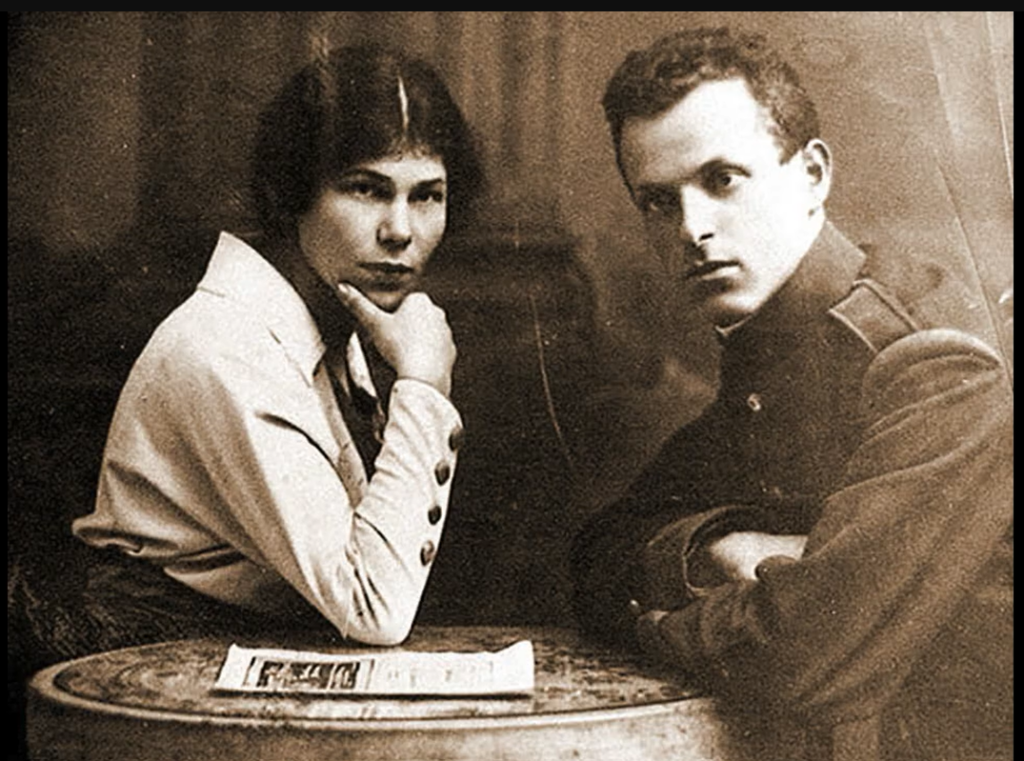
In the documentary about her mother, Rhodia also evokes the atmosphere of Bucharest in earlier times, illustrating her account with historical photographs. She describes an elegant, cosmopolitan city, often referred to as the “Paris of the East”, where cafés played an important role in social and cultural life.
Intellectuals and professionals from different fields would gather in these establishments, spending hours discussing politics, literature and current affairs, sometimes over a single cup of coffee. This was the Bucharest in which Erica Mann spent her early years and to which she would later return after completing her studies in Paris.
Paris and the Courage to Follow Her Own Path
From an early age, Erica displayed remarkable intelligence and a strong determination to pursue higher education. She wanted to study architecture in Paris, but her father was firmly opposed to the idea. Jakob believed that the appropriate future for his daughter lay in marriage and family life, rather than in a profession dominated almost entirely by men.
Eventually, after consulting his friends, Jakob agreed to let her go. They had persuaded him that, although Erica was unlikely ever to practise as an architect, her years in Paris would at least give her the opportunity to meet educated young men with promising professional prospects.
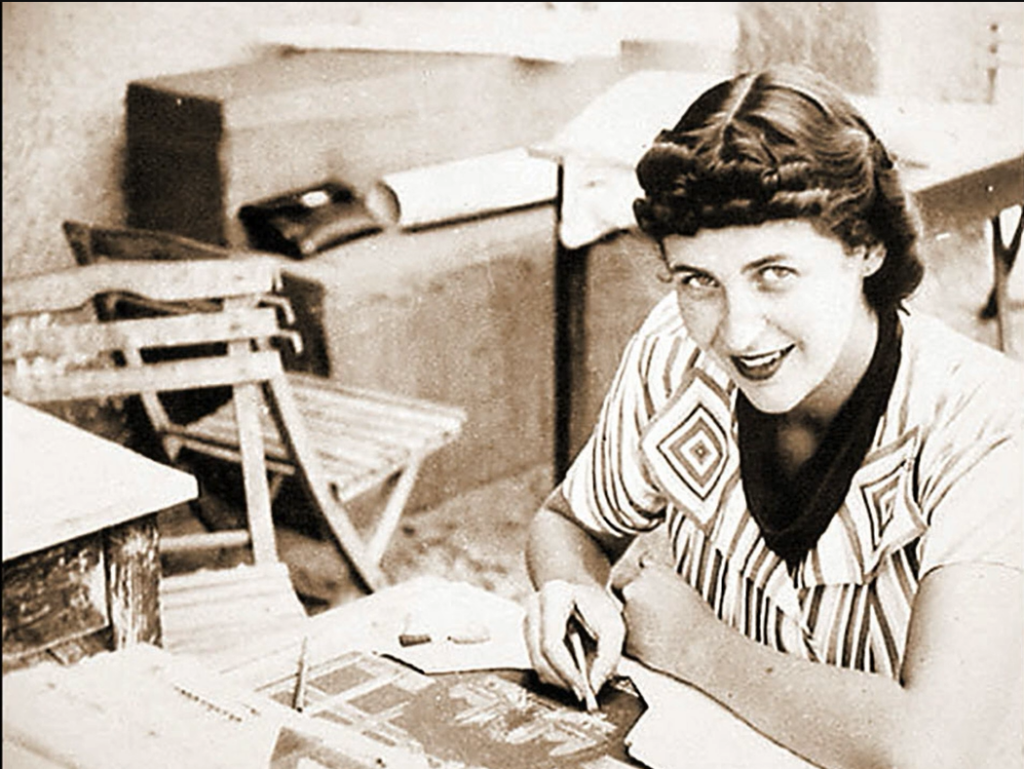
And so Erica travelled to France and enrolled at the prestigious École des Beaux-Arts in Paris. According to Rhodia, she was the only female student in her architecture section, studying in an overwhelmingly male environment.
Her years in Paris were among the happiest and most creative periods of her life. Rhodia shares photographs showing Erica in the architecture studio, working at her drawing board, as well as painting a mural in one of the institution’s spaces.
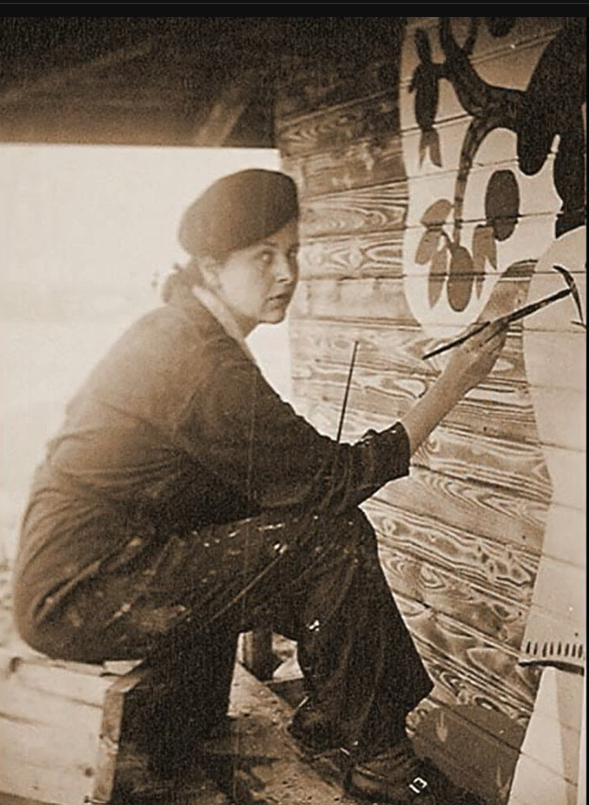
The precise subject and significance of the mural are unknown, but Rhodia considers it one of her mother’s earliest important artistic works.
Beyond her architectural training, Erica possessed considerable artistic talent. Her life drawings, preserved in the family archives, reveal an impressive eye for detail and a remarkable level of technical skill.
“She was absolutely brilliant,” Rhodia says as she admires the sketches her mother produced during her student years.
The photographs show Erica at around nineteen or twenty years of age, in an environment where she appeared to be entirely in her element.
Returning to Bucharest and Her First Professional Experiences
At approximately twenty-one years of age, having completed her studies, Erica returned to Bucharest. Despite her qualifications, she was unable to secure a position as an architect. Instead, she began working for a company specialising in furniture design.
Rhodia admits that she has found no photographs or documents in the family archives showing the furniture her mother designed during this period. Nevertheless, the fact that Erica remained employed leads her to believe that her talent and professional abilities were appreciated.
It was the late 1930s, and Europe was moving inexorably towards another war.
An Unexpected Encounter on the Eve of War
Around the same time, a Jewish veterinary surgeon had arrived in Bucharest after fleeing Poland following the German invasion of September 1939. In his homeland, he had been a well-known veterinarian and had run his own practice.
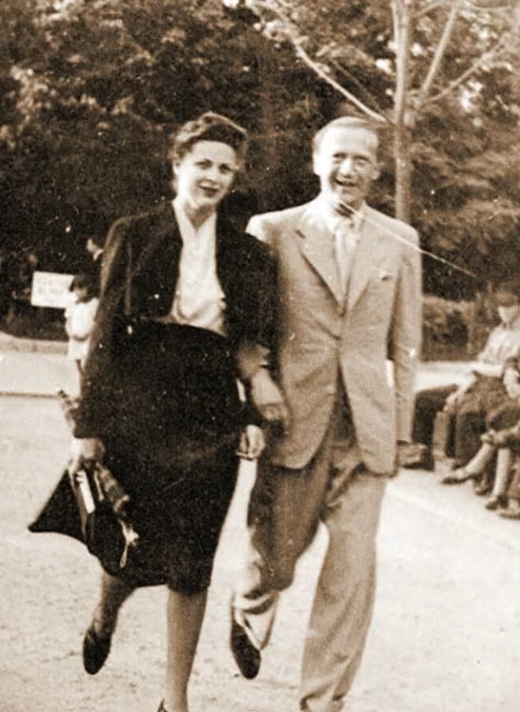
Forced to escape persecution, he found refuge in Romania, where he was granted permission to establish a new veterinary practice. This was the man who would become Erica Mann’s husband.
Rhodia recounts the circumstances of their meeting with considerable humour. The veterinarian had heard about Erica and, in particular, about her beautiful legs. He decided to telephone her, and the young woman’s response was wonderfully direct:
“Well, if you’ve heard that I have beautiful legs, you’d better come and see them.”
He accepted the invitation, and the couple became engaged almost immediately.
Photographs from their honeymoon, spent travelling along the Danube, show a young, elegant couple, full of life. Both were intelligent, well educated and thoroughly trained in their respective professions.
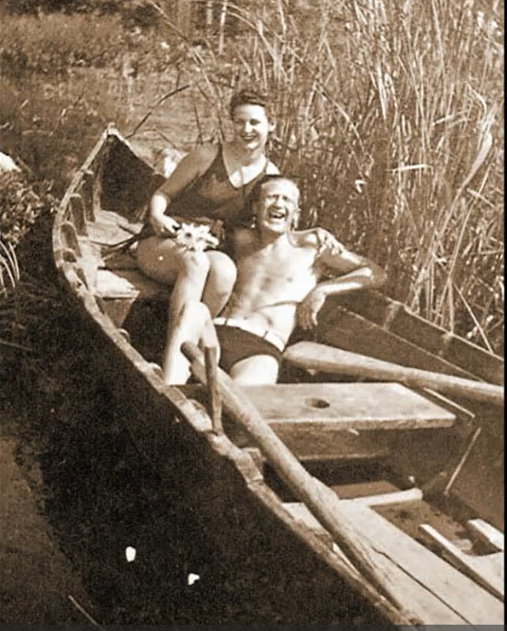
Their future seemed promising. Yet Europe was already at war, and the events that followed would change the course of their lives completely.
Exile: A Two-Year Journey in Search of a New Beginning
In 1940, the war engulfing Europe had reached Romania’s borders. In June, the Soviet Union occupied Bessarabia and Northern Bukovina, and the political and military situation was becoming increasingly uncertain. Against this backdrop, Erica Mann and her husband decided that the time had come to leave the country.
They could not have known, however, that their departure would turn into a journey lasting approximately two years, during which they would travel thousands of kilometres in search of somewhere they could rebuild their lives.
Rhodia Mann retraces their route with the help of a map, estimating that her parents travelled around 7,000 miles — more than 11,000 kilometres — before eventually reaching Kenya.
From Romania to Cyprus and Palestine
The first stage of their journey took them from Romania towards Cyprus, aboard a ship carrying refugees. According to Rhodia, the authorities in Cyprus had agreed to admit 500 people. Each passenger had been assigned a number, but Erica’s and her husband’s numbers exceeded the permitted limit. While some of the refugees were allowed to disembark, they were forced to remain on board.
The ship continued towards Haifa, the principal port of Palestine, which was then under British administration. Although both came from Jewish families, Rhodia’s parents were not practising Jews and did not define their identities primarily through religion. Rhodia describes them as educated, cosmopolitan people, accustomed to travelling and living among different cultures.
Palestine did not seem to them a place where they could build their future. They spent approximately a year in a refugee camp, a period their daughter describes as deeply unhappy for them both. Eventually, they approached the British camp commander and asked for help in finding somewhere else to go.
A Difficult Journey Along the African Coast
Their request was granted, and Erica and her husband were taken aboard a British military vessel that was to sail along the eastern coast of Africa, round the southern tip of the continent and continue to Cape Town. Their journey was interrupted in Durban, South Africa, where Erica’s husband became seriously ill and required hospital treatment. By the time he recovered, the ship had already departed.
The couple were therefore forced to continue their journey northwards using various forms of transport, including trains, buses and lorries, until they reached Northern Rhodesia, a territory then under British administration and known today as Zambia. There, they were assigned to another refugee camp, where they would spend approximately another year.
First Impressions of Africa, Preserved in a Sketchbook
Despite the difficulties she faced, Erica never abandoned her artistic interests. When leaving Europe, she had managed to take a few drawing materials with her, which she continued to use throughout the journey. She filled a sketchbook with drawings that captured her first impressions of Africa.
In the documentary, Rhodia shares several of these sketches, preserved in the family archives.
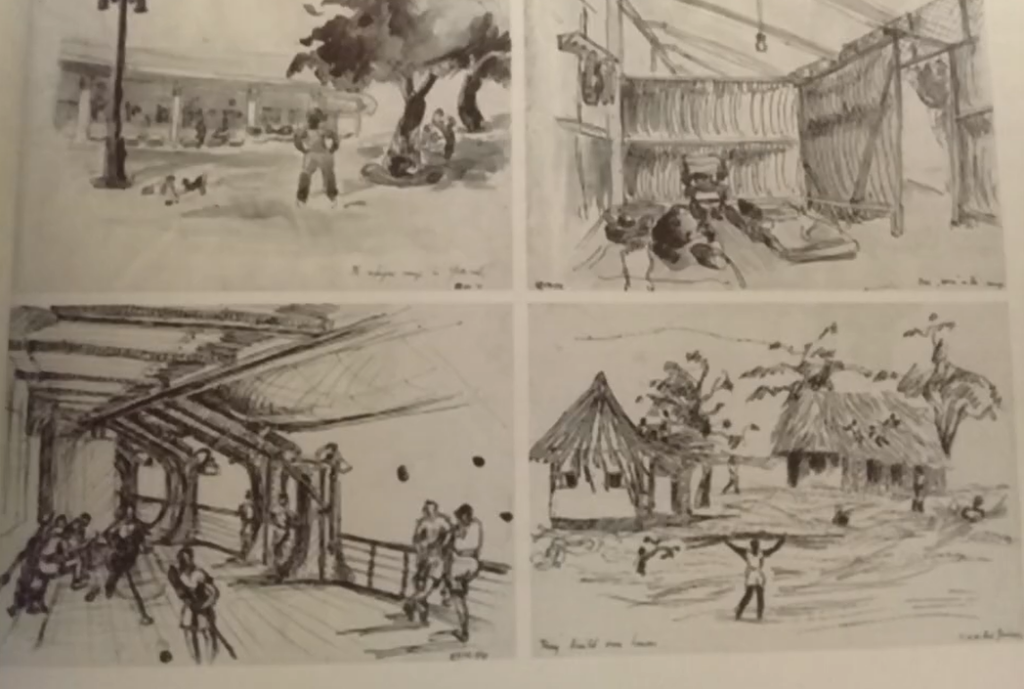
One depicts the place where her parents had been accommodated aboard the ship carrying them along the African coast. They had no proper cabin, merely a corner of the deck screened off by a partition, where they slept on a mattress laid directly on the floor.
These were the conditions in which the couple travelled towards a future that remained deeply uncertain. And yet, as Rhodia observes, even such difficult experiences did not prevent them from discovering the beauty of the continent.
“They both seemed to have fallen in love with Africa at first sight,” she recalls.
A Year in a Refugee Camp in Northern Rhodesia
Upon reaching Northern Rhodesia, Erica and her husband were accommodated in a refugee camp, far removed from the professional and social lives they had known in Europe.
Rhodia presents two photographs that reveal the striking contrast between the camp’s official appearance and the actual conditions in which her parents lived.
The first shows the administrative buildings, neat and well organised, which might have created a favourable impression on visitors.
The second reveals the accommodation assigned to the couple: a modest, crudely constructed hut with a thatched roof.
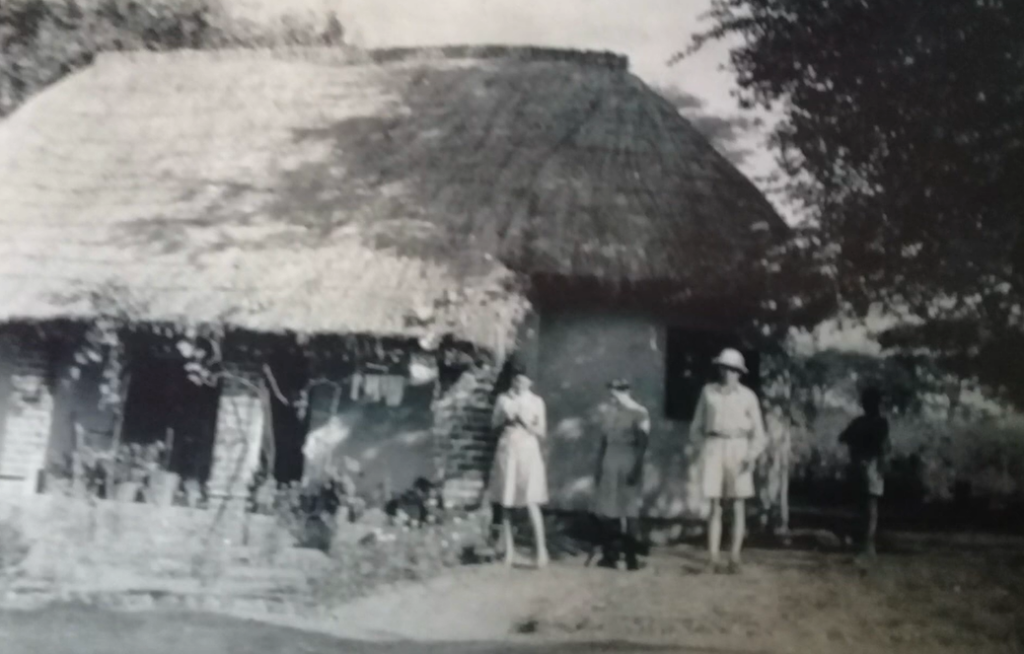
They would live there for approximately a year. During this period, Erica was pregnant with Rhodia.
Life in the camp was difficult for them both. Neither could practise their profession, and the lack of meaningful work in which to use their knowledge and skills weighed heavily on them.
Nevertheless, neither was prepared to resign themselves to inactivity.
Erica’s husband, a veterinary surgeon, began exploring the surrounding area and visiting local villages, taking an interest in the animals kept by the inhabitants, their livestock numbers and the diseases affecting them.
Erica, meanwhile, began visiting local communities and collecting objects of African art and culture, laying the foundations of a collection that would later become well known. As Rhodia observes, although her parents found themselves in an isolated part of Northern Rhodesia, neither allowed the time to pass without trying to discover, learn and create.
1942 — A New Life Begins to Take Shape in Kenya
In 1942, after approximately two years of travelling and living in refugee camps, Erica’s husband received a job offer in Kenya, which was then a British colony.
It was the opportunity they had been waiting for: a chance to resume their professional lives and settle somewhere they could begin building a future.
Rhodia presents a photograph taken when her parents arrived in Kenya, an image she considers particularly revealing of their personalities.
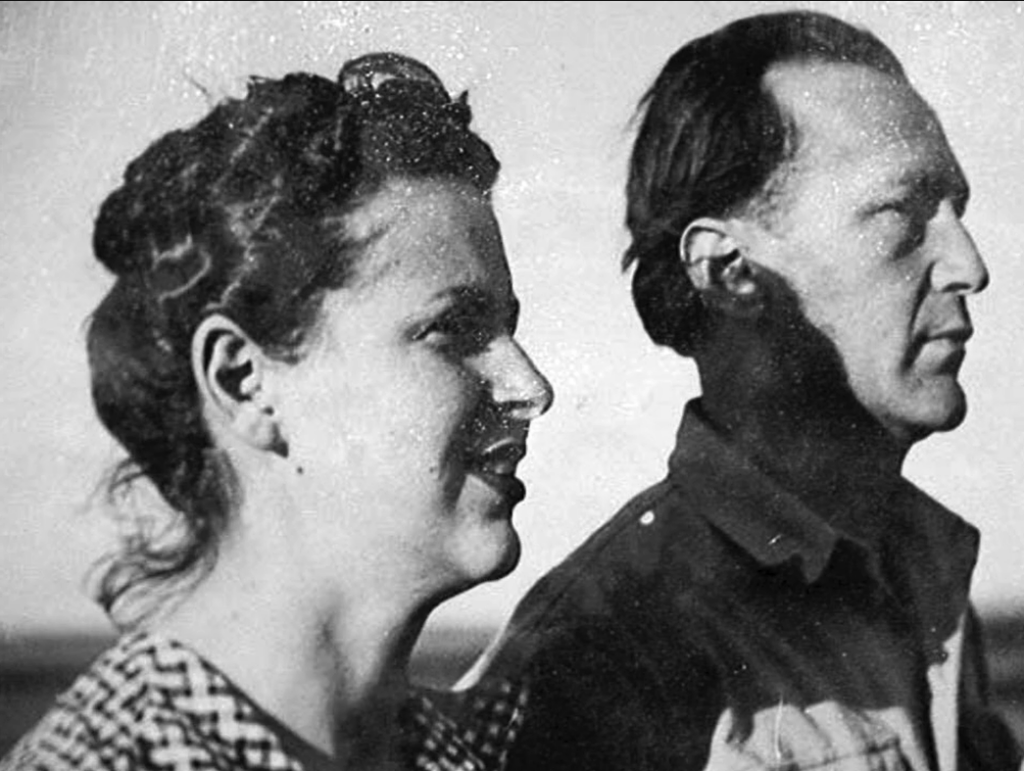
After years of displacement, they had left behind their homelands, their families and much of the life they had once known.
“All they had left was the future,” Rhodia says.
The photograph, she adds, captures the determination with which her parents were ready to face that future and begin a new chapter in their lives. For the couple, settling in East Africa represented an opportunity to rebuild their lives and, at long last, return to the professional activities from which they had been separated during their years in exile.
Erica’s husband, a veterinary surgeon by profession, had been offered a position as a veterinary inspector at a slaughterhouse operated by Liebig, a company producing canned corned beef for the British Army, including troops stationed in North Africa and Burma.
Rhodia imagines how difficult this change must have been for her father, who was accustomed to treating and saving animals rather than working in a facility where they were slaughtered. Nevertheless, it was the first job offer he had received after two years as a refugee, and he was determined to make the most of the opportunity.
Outsiders in British Colonial Society
Adjusting to their new life was not without its difficulties. Near the slaughterhouse stood a residential compound where the company’s British employees lived. Erica and her husband, however, were not accommodated alongside them. Instead, they were given a small house on a hill, some distance from the rest of the community.
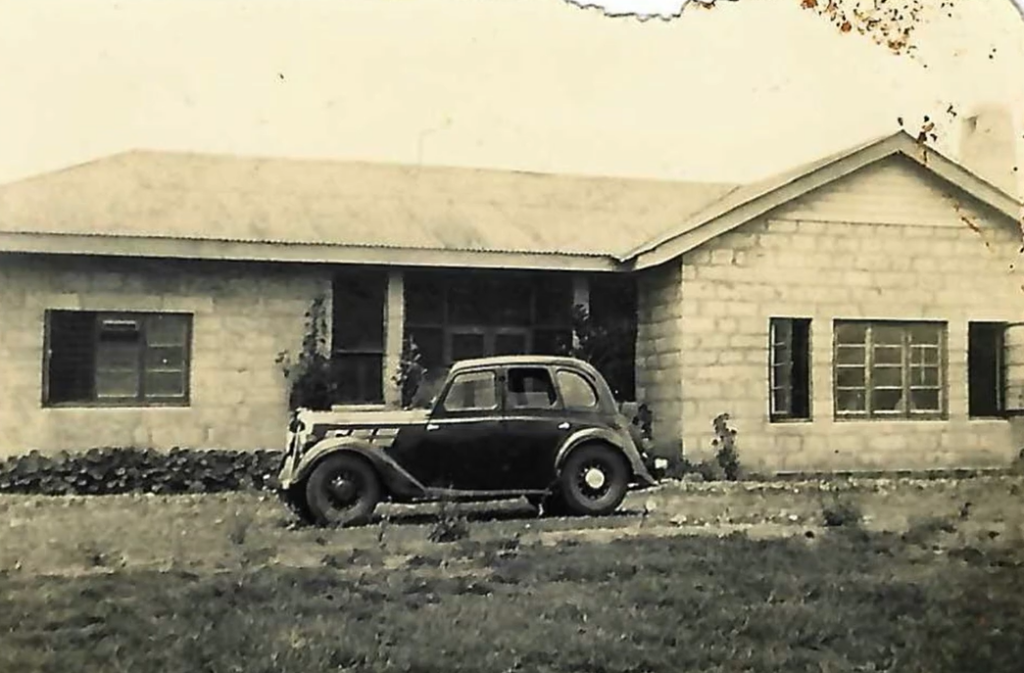
Rhodia suggests that their status as foreigners contributed to this separation.
“My parents, being bloody foreigners, were left outside the compound, all on their own, in a little house on a hill,” she recalls, using a humorous expression that reflects the prejudices of the time.
It took some time before the British community began to accept them and include them in its social life. Many years later, Rhodia returned to see the house where she had been born. The building had been abandoned and had fallen into disrepair. Over the years, it had been used both as a shelter for people and to house animals.
Only one thing remained to remind her of the time when her family had lived there: the eucalyptus trees her father had planted in 1942.
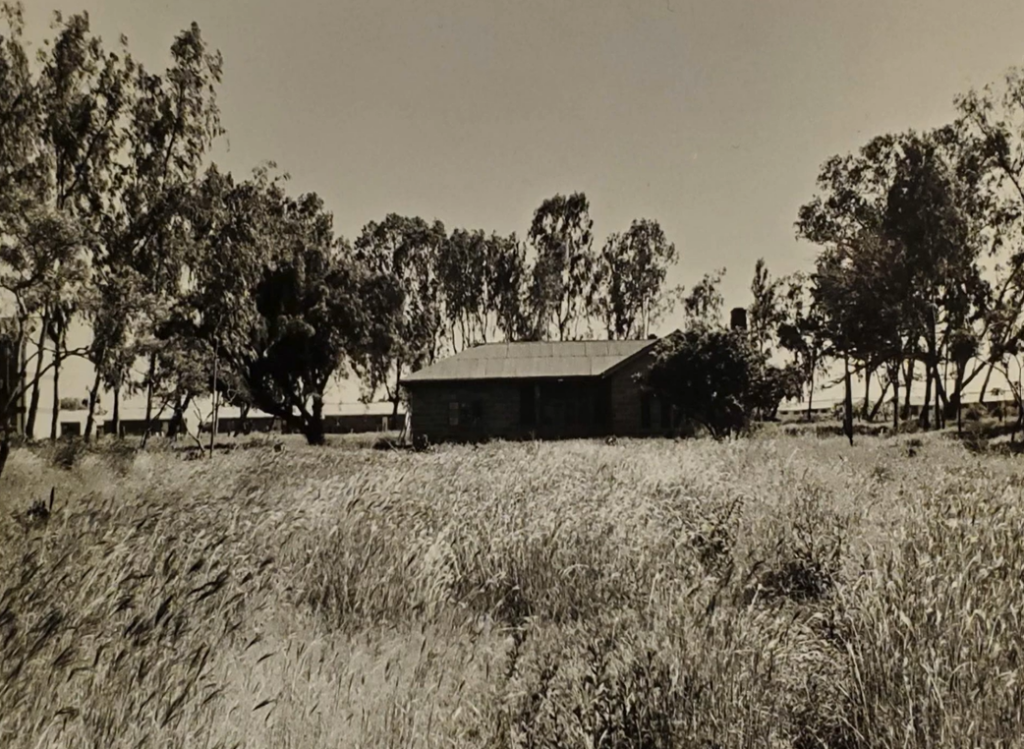
The trees had grown so tall that they had become a landmark, visible from miles away in Athi River.
For Rhodia, discovering them was particularly meaningful. They were evidence that her family had left a mark, however modest, on the place where they had begun their new life.
From the Drawing Board to the Veterinary Laboratory
During these first years in Kenya, Erica was unable to work in the profession for which she had trained in Paris. Yet, as Rhodia’s account repeatedly demonstrates, inactivity was simply not an option for her mother.
In the documentary, Rhodia presents a photograph of her father carrying out a veterinary inspection, examining cattle tongues for signs of parasitic disease.
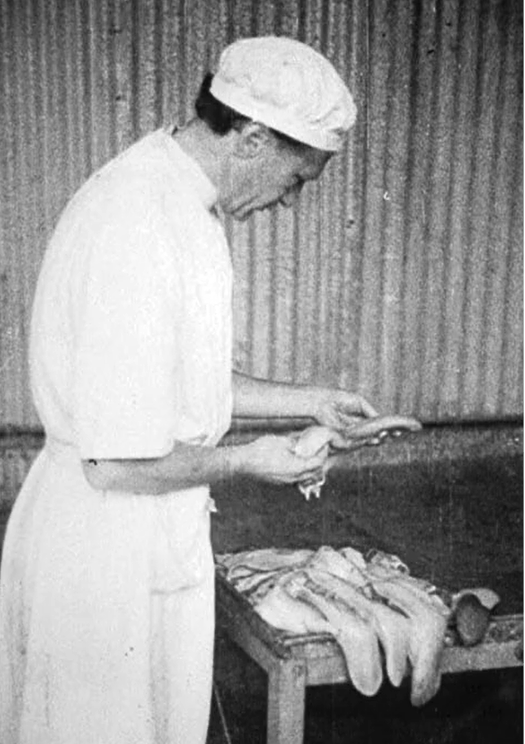
Erica began accompanying him to the laboratory, where she learnt to examine specimens under a microscope and identify the presence of parasites. In this way, she found a useful occupation in a field entirely different from architecture.
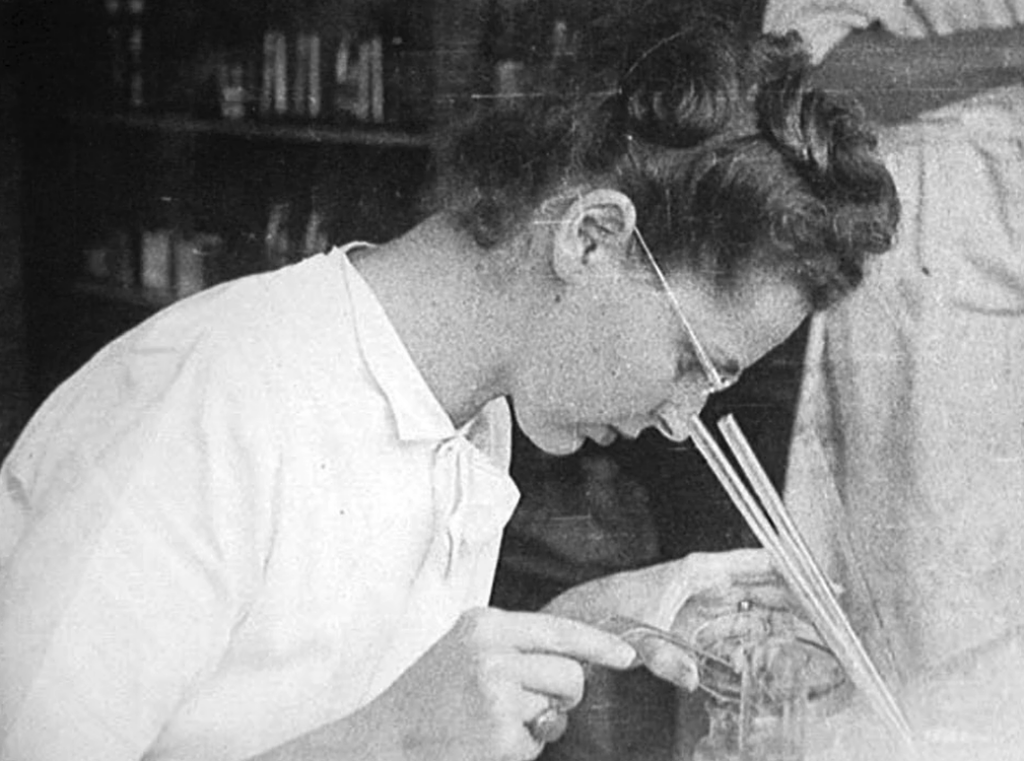
Rhodia emphasises her mother’s remarkable ability to adapt to circumstances and make use of her skills, whatever the situation. Although she could not practise as an architect, Erica never stopped learning or involving herself in whatever activities were available to her.
Discovering East Africa and a Passion for Nature
As they gradually settled into their new life, Erica and her husband also began exploring the region that had become their home.
Whenever the opportunity arose, they went on safari, discovering the landscapes, wildlife and communities of East Africa. Rhodia recalls that expeditions in those days were organised under very different conditions from those of today. Travellers were often accompanied by porters who carried their equipment and provisions.
One of her favourite photographs shows Erica leading an expedition across the plains towards Uganda, followed by the men carrying the luggage.
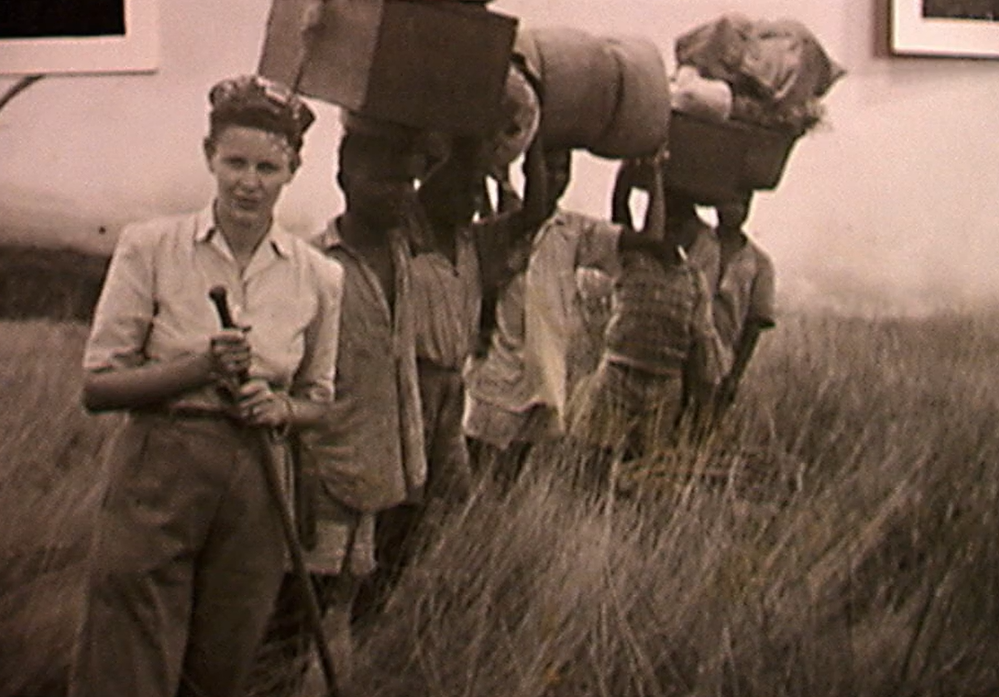
Looking at the photograph, Rhodia admits, with characteristic humour, that she feels a little envious of her parents, having been born too late to take part in such adventures herself.
For Erica, these journeys marked the beginning of a profound connection with the landscapes and cultures of East Africa, a region that would remain her home for the rest of her life.
Returning to Architecture
In 1948, after six years in Kenya, Erica Mann was increasingly eager to return to the profession for which she had trained in her youth. The years spent as a refugee, followed by her time in Athi River, had kept her away from architecture, but her interest in design and creative work had never diminished.
Around this time, the British colonial administration established a government department responsible for land and human settlements, providing Erica with an opportunity to seek employment.
Although she had studied architecture at the prestigious École des Beaux-Arts in Paris, the British authorities did not recognise her professional qualifications. Consequently, she could not be employed as an architect and was instead offered a position as a draftswoman.
Nevertheless, it was her first step towards a career in the field she had chosen as a young woman. During the same period, the British administration had also established a veterinary training and research centre at Kabete, on the opposite side of Nairobi from Athi River.
As both Erica and her husband would now be working in different parts of the capital, their daily journeys had become increasingly difficult. The family therefore decided to move to Nairobi, leaving behind the house where they had begun their life in Kenya.
Nairobi, a City Undergoing Profound Change
After joining the government department, Erica Mann began taking part in projects concerned with Nairobi’s urban development. The capital of the British colony was experiencing a period of growth, and the authorities were attempting to anticipate how the city might expand over the coming decades.
Rhodia recalls that her mother had been given the task of helping to plan a city which, according to estimates at the time, was expected to accommodate no more than 250,000 inhabitants. Viewed from the perspective of present-day Nairobi, with its population of several million, that estimate now seems remarkably modest.
For the colonial administration in 1948, however, planning a city of this size represented a major undertaking. Erica contributed to the preparation of the 1948 Nairobi Master Plan, one of the key documents guiding the development of Kenya’s capital.
According to research into her professional work, she collaborated on the project with Thornley Dyer, who was responsible for urban planning, and Helga Richards, working alongside the South African town-planning firm Thornton White.
Her involvement in preparing the master plan marked an important stage in Erica Mann’s professional career.
Although she did not officially hold the position of architect, she finally had the opportunity to put her education, experience and artistic abilities to use in a field closely related to the one she had chosen in her youth.
Rhodia regards this period as one of the achievements of which her mother was particularly proud. In town planning, Erica had discovered not merely an alternative career, but a field that genuinely fascinated her and in which she would go on to demonstrate remarkable abilities.
From Years of Exile to a Fulfilling Life in Nairobi
By the early 1950s, life had changed considerably for the Mann family. After the hardships of their years as refugees and their difficult beginnings in Kenya, Erica and her husband had gradually become part of Nairobi’s British community and established an active social life.
Rhodia recalls 1952 as a time when her parents were finally beginning to enjoy the stability and opportunities they had sought for so long. The future they had imagined during their years of displacement was, at last, becoming a reality.
In one of the photographs featured in the documentary, Erica is elegantly dressed, ready to attend the horse races. For Rhodia, the image illustrates just how much her mother’s circumstances had changed.
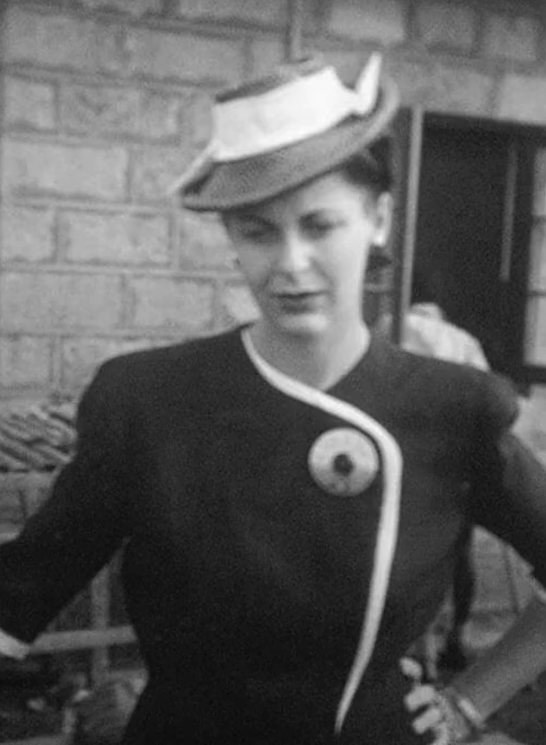
She was no longer the penniless refugee who had arrived in Africa with a single suitcase, but an independent woman with an established career and a recognised place in society.
The European elegance Erica had retained despite everything she had endured had become part of her new life in Africa.
A Romanian Traditional Costume Preserved Throughout Exile
At that time, Nairobi had a lively artistic and professional community. The local architects’ association and art society organised cultural and social events, including an annual fancy-dress ball.
One of the photographs shown by Rhodia depicts Erica attending such an event, dressed in a traditional Romanian costume.
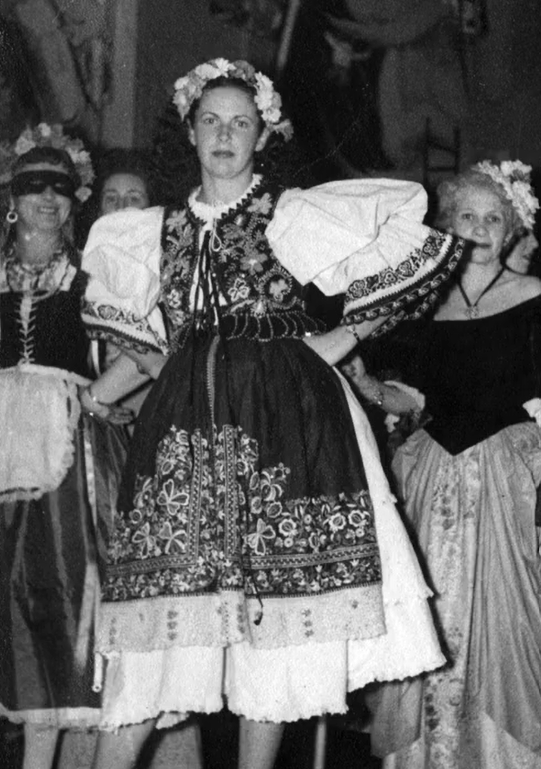
It was the very costume she had taken with her when she left Romania more than a decade earlier.
During her journey through Europe and Africa, when she had been forced to leave almost all her personal possessions behind, Erica had nevertheless found room in her luggage for this costume.
According to Rhodia, the ball in Nairobi was the first occasion on which her mother had been able to wear it since leaving her homeland. Looking at the photograph, Rhodia notices Erica’s sad, thoughtful expression.
“I’m not surprised, because that costume symbolised everything she had left behind,” she says.
Although she had built a new life in Kenya, Erica had not forgotten the country where she was born and raised, or the world from which she had been forced to part during the war. The traditional Romanian costume, carefully preserved throughout her years as a refugee, remained one of her most tangible connections to the past.
Creativity Beyond Her Professional Life
A few years later, another photograph shows Erica and her husband attending that year’s fancy-dress ball. This time, the atmosphere is entirely different.
Rhodia describes them both as cheerful and relaxed, people who had finally found their place within Nairobi’s community.
“At last, they belonged. They were no longer bloody foreigners,” she recalls, humorously returning to the expression she had used to describe her family’s early years in Kenya.
The costumes worn by the couple had been designed and made by Erica herself. She had chosen to dress as the Snake Goddess of the Minoan civilisation, while her husband appeared as the famous Egyptian pharaoh Tutankhamun. According to Rhodia, their appearance attracted considerable attention and was among the most admired of the evening. The episode offers another glimpse of Erica’s artistic talent, which extended far beyond architecture and town planning to drawing, painting, design and costume-making.
A Special Affection for Animals
Beyond her professional and artistic pursuits, Erica had developed a deep affection for animals. Rhodia recalls that her mother showed remarkable tenderness towards them and would seek opportunities to get close to them whenever she could.
The documentary includes photographs of Erica with a cheetah cub and a monkey.
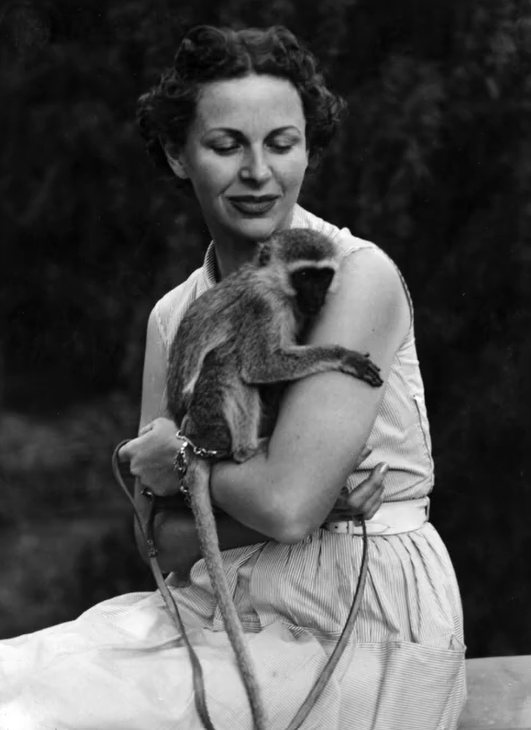
Erica was particularly fond of the monkey, although Rhodia did not share her mother’s enthusiasm. She remembers an occasion when the animal jumped at her and bit her leg, an experience that prevented her from developing quite the same affection for monkeys.
Erica, however, continued to adore them. Rhodia believes that her mother might even have pursued a career studying wildlife had life not already led her towards architecture and town planning. Her love of animals, fascination with nature and curiosity about the world around her nevertheless remained important aspects of her personality.
A Portrait of Erica Mann in the 1960s
By the 1960s, Erica Mann had consolidated her professional standing and become a familiar figure in Nairobi’s cultural and intellectual circles.
In the documentary, Rhodia presents a portrait of her mother painted during this period by a Polish artist.
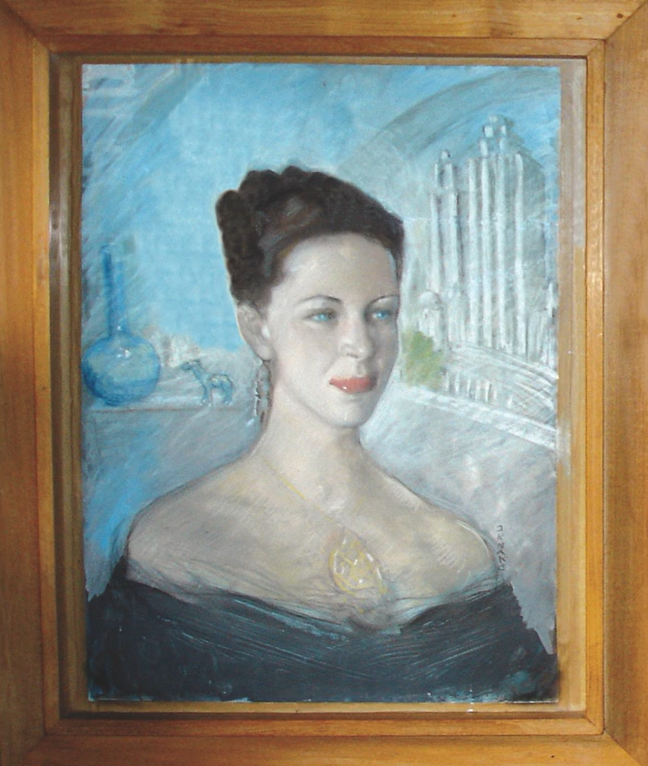
Erica is depicted as an elegant, cosmopolitan woman who had fully adapted to life in Kenya.
In the background of the painting, modern buildings can be seen, representing, in Rhodia’s interpretation, a vision of a city of the future.
“It hadn’t become a reality yet, but the dream was certainly there,” she observes.
For her daughter, the portrait illustrates how profoundly Erica’s life had changed since her arrival in Africa almost two decades earlier. The years spent in refugee camps and the family’s modest beginnings in Kenya were now behind them. Erica and her husband had succeeded in building a stable life and becoming part of Nairobi’s professional and cultural community.
The House on Crawford Road: A Meeting Place for Artists and Intellectuals
During this period, the Mann family lived in a house on what was then known as Crawford Road, not far from the centre of Nairobi.
Rhodia recalls that she could walk into the city centre in approximately half an hour. Over time, the family home became what she describes as a genuine cultural salon.
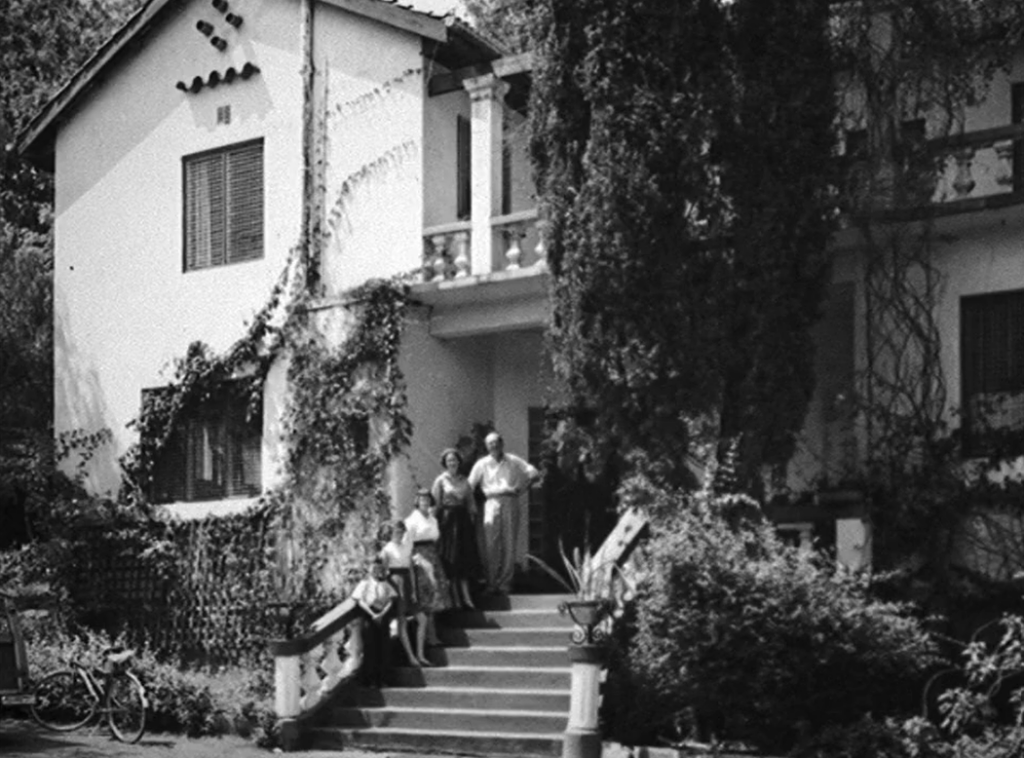
Her parents were sociable, curious people who enjoyed conversations that could broaden their understanding of the world. What mattered to them was not so much their guests’ professions or backgrounds, but whether they had something interesting to contribute to a discussion.
“My parents surrounded themselves with intelligent people who had something to say. It didn’t matter what they did, who they were or where they came from,” Rhodia recalls.
The house on Crawford Road thus became a gathering place for actors, singers, playwrights, doctors, parasitologists and architects from different parts of the world. Rhodia remembers, with humour and affection, that almost anyone arriving in Nairobi was expected to meet the Manns. Their home had become a meeting place for part of the city’s cultural and professional community, with Erica and her husband at the heart of its lively social life.
Architecture and Town Planning: Lifelong Pursuits
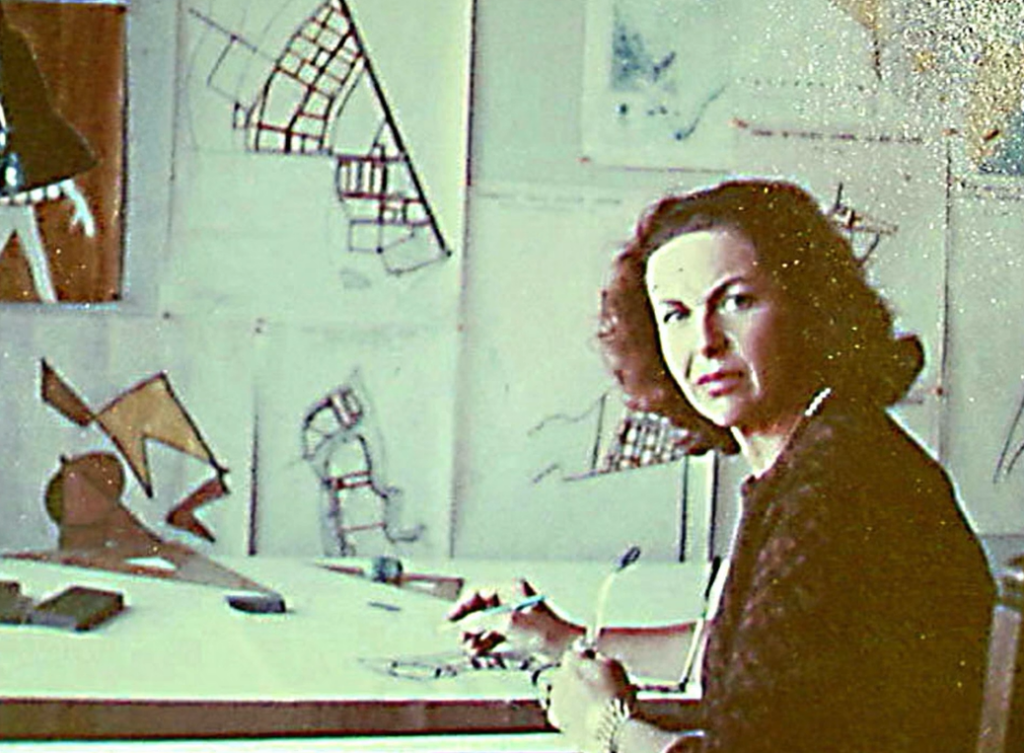
As the documentary continues, Rhodia presents several photographs showing Erica at work in her office at the Ministry of Lands and Settlement.
In one of the images, a town-planning map can be seen on the wall behind her. Rhodia admits that she does not know exactly which project her mother was working on when the photograph was taken, but she is convinced that Erica was involved in another planning initiative.
A second photograph also shows her at her desk, leaning over her working documents.
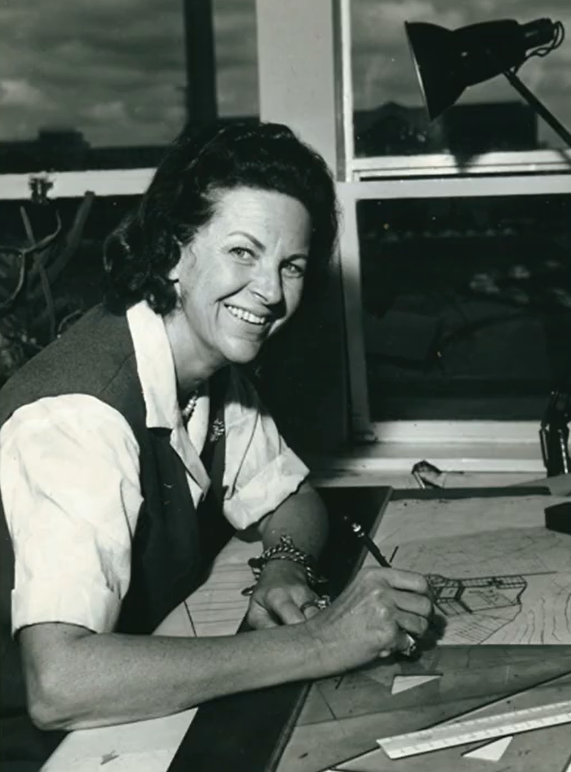
For Rhodia, such images are representative of her mother’s entire professional life. She remembers Erica as someone who always seemed to have a pencil or pen in her hand, constantly occupied with designing something that might, in one way or another, be useful to people. This desire to create things with a practical purpose would also become evident in the community development projects Erica undertook in the years that followed.
From Town Plans to Costumes for the Puppet Theatre
Alongside her professional work, Erica continued to nurture her passion for art. Rhodia recalls that, at the time, Nairobi had a glove-puppet theatre whose members met once a month at the Nairobi Arboretum.
Erica became involved in its activities, producing sketches and costume designs for the characters.
In the documentary, Rhodia presents several of her mother’s original drawings, created for characters from Giacomo Puccini’s opera Tosca.
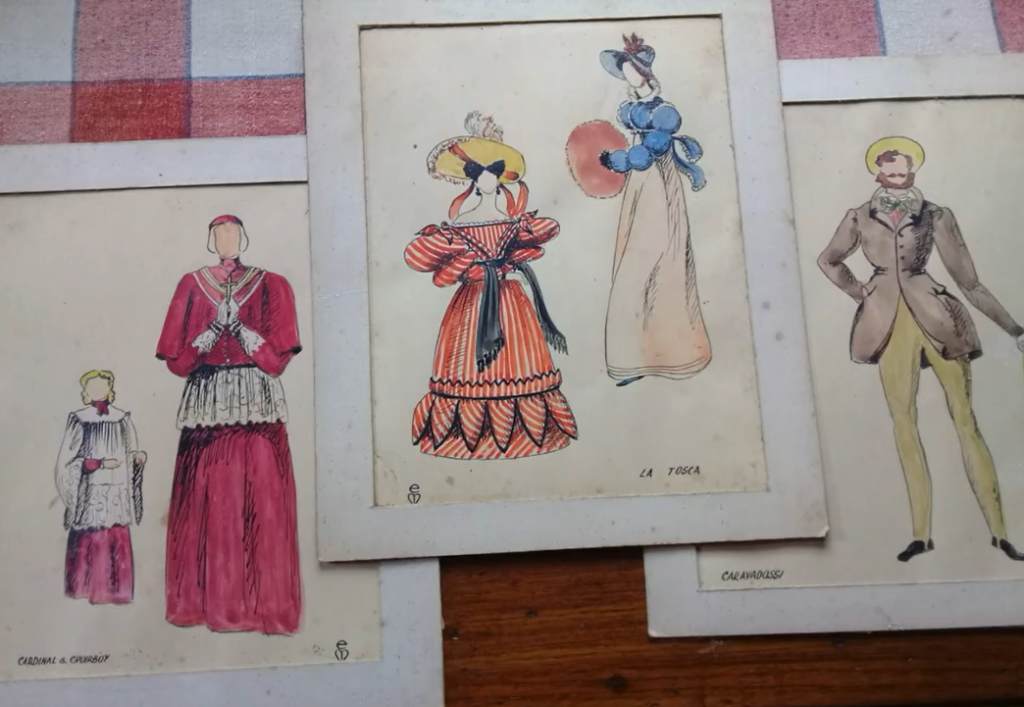
The sketches demonstrate Erica’s attention to detail, proportion and the expressive possibilities of costume design — qualities she had applied throughout her life in numerous artistic fields. For Rhodia, these drawings hold particular sentimental value, as they are the only original costume sketches by her mother that she still possesses. Her admiration is evident as she presents them. She considers them extraordinary and is delighted that, through the documentary, she can share them with a wider audience.
An Unusual Project for Nairobi’s Agricultural Show
As her career progressed, Erica Mann began taking on projects that extended beyond architecture and town planning. Some of these were undertaken in collaboration with her husband, whose professional work in veterinary medicine was also becoming increasingly important.
One such project involved the official stand of the Veterinary Department at Nairobi’s annual agricultural show.
Erica’s husband had been entrusted with organising the department’s participation in the event, while Erica was given responsibility for designing the stand.
Rather than creating a conventional exhibition structure, she designed a stand inspired by the architecture of an Arab fortress.
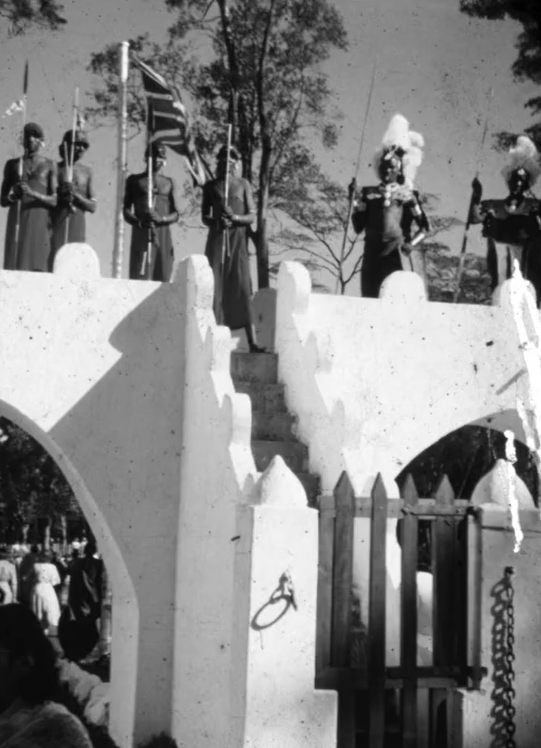
For the presentation, her husband brought several Samburu warriors from northern Kenya, who took part in the activities held within the exhibition space.
According to Rhodia’s recollections, the result was one of the most spectacular stands at the entire show, attracting attention both for its architectural design and for the presence of representatives of the Samburu community.
1963 — An Institute for Training Animal Health Professionals
Another important milestone came in 1963, when Igor Mann helped establish an institution dedicated to training technical and support staff in the veterinary field.
He believed that the development of Kenya’s livestock sector required specialists capable of working directly with animals and with people in rural communities. Their training would cover not only animal health, but also areas such as pasture management, animal breeding and artificial insemination.
After securing the necessary funding, the project came to fruition in 1963 with the opening of the Animal Health and Industries Training Institute at Kabete, near Nairobi.
Among the photographs preserved in the family archives is one showing Erica and her husband accompanying Jomo Kenyatta during a visit to the institute.
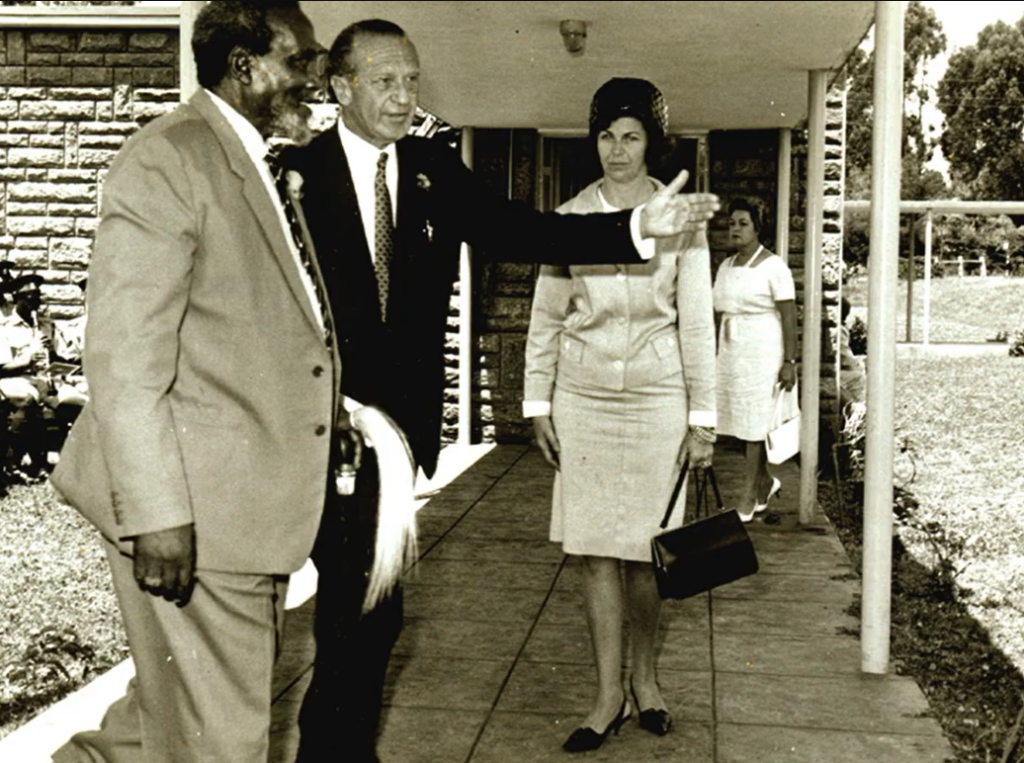
The image captures the Mann family’s involvement during a period of profound change for Kenya, which would gain independence from Britain in December 1963.
For those interested in learning more about the life and work of veterinary surgeon Igor Mann, Rhodia has also produced a documentary dedicated to her father – Igor Mann, The Story of a Super-Vet, available on YouTube. His story complements the portrait of the Mann family and offers further insight into his contribution to the development of veterinary medicine in Kenya.
Approximately 60 Illustrated Manuals for Rural Communities
Igor Mann’s commitment to developing economic activities related to livestock farming extended beyond the establishment of the institute. He began writing a series of practical guides, primarily intended for people living in rural areas who wished to earn an income from activities involving livestock rearing and the use of animal products.
Erica contributed to these publications by producing the drawings and explanatory diagrams that accompanied the texts.
One of the guides mentioned by Rhodia explained methods of preparing crocodile skins for export.
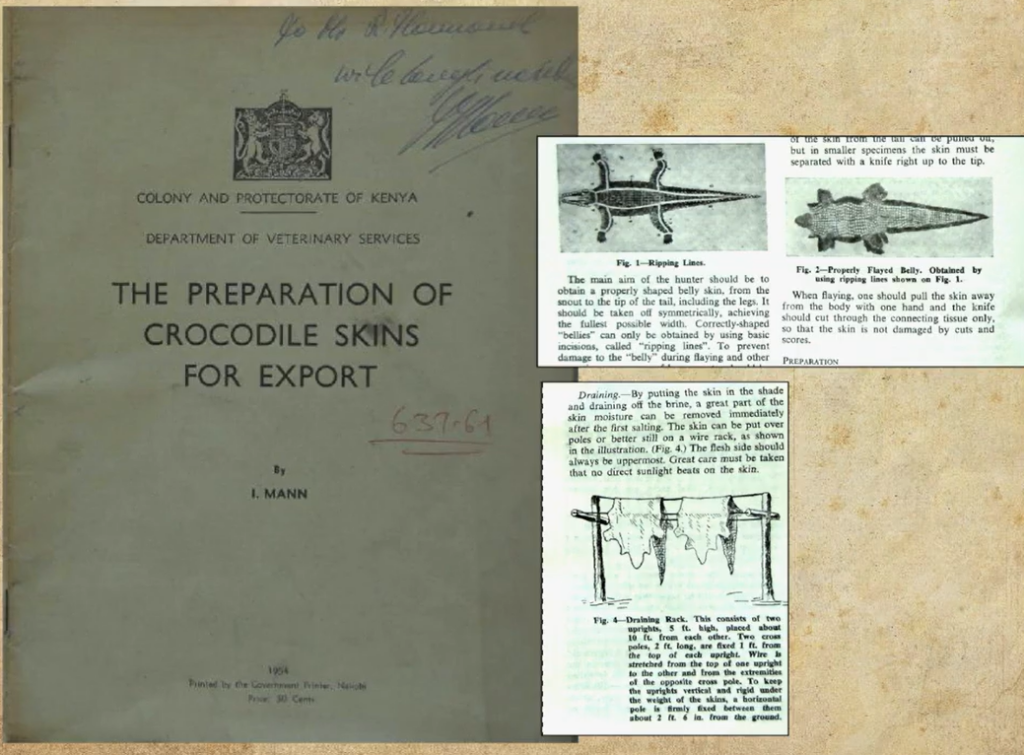
According to her estimate, the couple produced approximately 60 such booklets together, each devoted to practical activities that could provide sources of income for people living in rural communities.
Erica’s contribution was essential in making the information accessible. Through her illustrations, readers could more easily follow and understand the technical explanations. It was another example of how her artistic training and experience in technical drawing found a practical application.
A Slaughterhouse in Northern Kenya
The professional collaboration between Erica and her husband continued with a project undertaken at Archer’s Post, a settlement in northern Kenya.
Plans had been made to build a slaughterhouse where livestock farmers from the surrounding region could bring their cattle for slaughter. The project also aimed to make use of the products obtained through this activity, including animal hides.
Igor Mann was involved in organising the operations, while Erica produced the illustrations and graphic materials required for the project. Rhodia recalls that the slaughterhouse was still standing at the time she told the story and believes that some of the original plans may still have been in use.
Beyond these recollections, the projects undertaken by Erica and her husband illustrate their shared interest in applying professional knowledge to activities with practical outcomes, particularly in the fields of animal health and the rural economy.
Representing Kenya at International Trade Fairs
Erica Mann’s professional experience and linguistic abilities also opened the door to a field quite different from architecture and town planning: promoting Kenya at international trade events. At the time, Erica spoke six languages fluently, an ability that made her particularly well suited to activities involving communication with representatives from other countries.
She consequently began attending international trade fairs as a representative of Kenya, helping to promote the country’s products and economic opportunities. One of the photographs preserved in the family archives shows her at such an event in Berlin.
Rhodia recalls that the Kenyan products being promoted included coffee and traditional kiondo baskets, woven from plant fibres.
She does not, however, know exactly which other products were presented on that occasion.
Another photograph shows Erica alongside two prominent political figures of the period: Willy Brandt, the German politician who would later become Chancellor of West Germany, and Tom Mboya, one of the leading figures in Kenya’s independence movement.
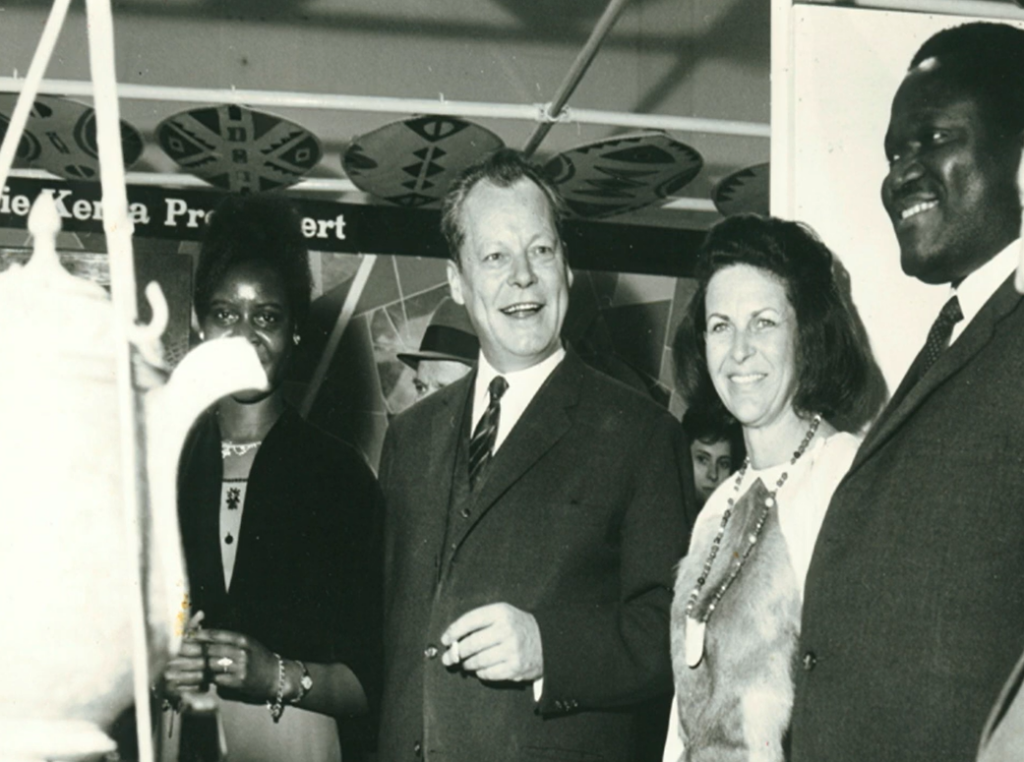
Her presence at such events reflects the role she had come to play in representing Kenyan interests abroad. With a touch of humour, Rhodia describes her mother as something of an unofficial ambassador for Kenya. Judging by her smile in the photographs, Erica appeared to be thoroughly enjoying this new experience.
Build and Plan — Editorial Initiatives Dedicated to Architecture
Erica’s interest in architecture extended well beyond her work in design and planning. Convinced that professionals in Kenya needed a publication dedicated to their field, she decided to become involved in specialist publishing.
She founded and edited an architectural magazine entitled Build, which Rhodia describes as the only publication of its kind in Kenya at the time. This was followed by Plan, a monthly magazine.
Erica was responsible for identifying and selecting content, seeking out specialist articles and information from different countries and bringing them to the attention of Kenyan readers. The publications continued for several years, although the precise circumstances surrounding their closure remain unknown.
Rhodia believes that, after personally sustaining the editorial effort for some time, her mother may simply have grown tired and been unable to find anyone willing to take over responsibility for continuing the project.
Regardless of how long they remained in circulation, these initiatives illustrate Erica Mann’s determination to encourage the exchange of ideas and professional knowledge in a constantly evolving field. For her, architecture was also about sharing expertise, fostering dialogue among specialists and introducing readers to new perspectives on the built environment.
“Development Must Be Based on Need and Not on Greed”
In the later years of her career, Erica Mann took on increasingly important responsibilities in regional planning. Before her retirement, she was entrusted with developing plans for two extensive regions of Kenya: the Coast Province and the North Eastern Province.
This work involved far more than drawing up development plans. Erica needed to understand the particular characteristics of the communities she was working for, their ways of life and the challenges faced by local people. Rhodia recalls that her mother followed an approach she considered essential.
Whenever Erica visited a community for which she was preparing a development project, she would first speak to the men, asking them what they needed. She would then have the same conversation with the women. Only after listening to both perspectives would she begin preparing a plan intended to address the needs of the community as a whole.
This approach reflected a conviction that Erica frequently expressed and which her daughter has never forgotten:
“Development must be based on need and not on greed.”
For Erica, the design of a space or the development of a settlement should not be driven solely by economic interests or decisions made by the authorities. It should begin with the realities and needs of the people who would live there. Rhodia believes that this principle remains just as relevant today and regrets that it is not always respected.
Women of Kibwezi — A Project That Gained International Recognition
In 1972, Erica Mann founded the Council for Human Ecology: Kenya (CHEK), an organisation dedicated to environmental protection and the development of rural communities.
Around the same period, she initiated Women in Kibwezi, a project designed to support women in Kibwezi, a town situated along the road between Nairobi and Mombasa. The initiative aimed to give participating women opportunities to earn their own income and improve their living conditions.
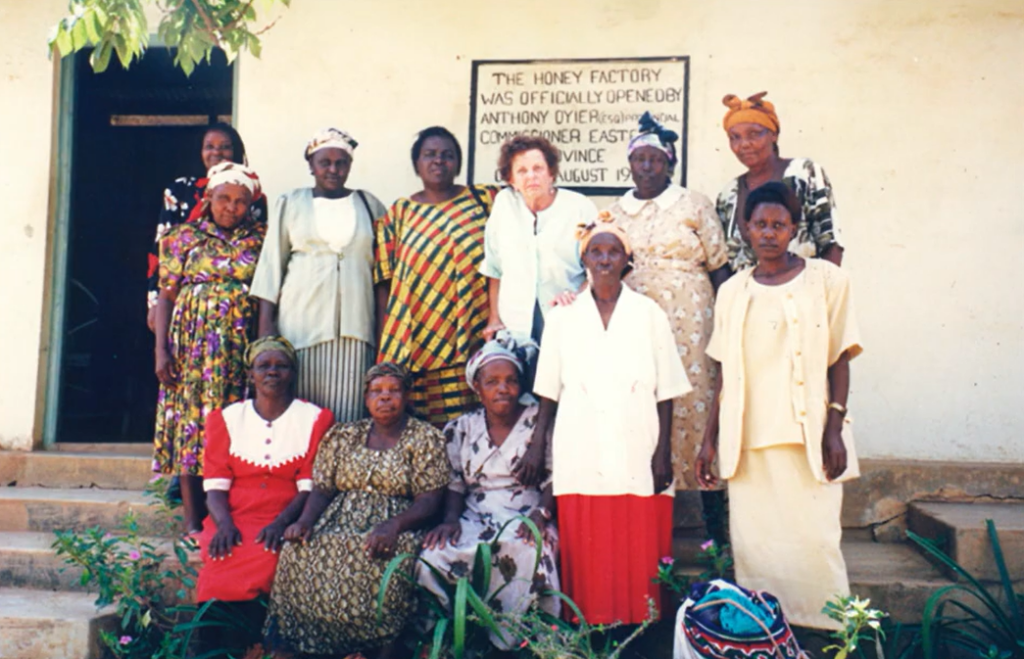
With support from several organisations, activities were developed in areas such as beekeeping, animal rearing, the production of building materials and small local businesses.
The project also addressed women’s rights to land, helping to create more favourable conditions for their economic activities. Its achievements attracted international attention.
In 1996, Women of Kibwezi was selected among the world’s 100 best projects at Habitat II, the United Nations conference held in Istanbul. This recognition highlighted the significance of an initiative through which Erica Mann had sought to put into practice a principle she had upheld throughout her career: that community development must begin with people’s genuine needs.
A Community Centre Inspired by Traditional African Architecture
Among the documents Rhodia discovered in her mother’s archives was an architectural drawing that particularly caught her attention.
It was a design for a community centre, conceived as a complex bringing together several spaces intended to accommodate the activities and needs of local residents.
Rhodia does not know who commissioned the project, nor whether it was ever built. Nevertheless, she considers the drawing particularly valuable, as it is the only architectural plan she has found in the family archives bearing both Erica’s signature and a date. One important detail is the choice of architectural form. Rather than designing a rectangular building inspired by European models, Erica conceived a complex based on the circular forms of traditional African dwellings.
This choice illustrates her interest in local architecture and her desire to incorporate traditional elements into projects intended for Kenyan communities. Rhodia hopes that someone might one day decide to build the community centre, although she acknowledges that the chances are slim.
The plan nevertheless remains a testament to Erica Mann’s understanding of architecture as a profession in which creativity, knowledge of the local environment and people’s needs should complement one another.
A Career Recognised Beyond Kenya’s Borders
Over the decades she spent in Kenya, Erica Mann earned recognition not only within the country’s professional community but also internationally. She had participated in events abroad and delivered lectures on a wide range of subjects, from African architecture and property development to economic initiatives supporting women in rural communities.
Her experience in town planning, her interest in traditional architecture and her involvement in community development projects had given her a broad perspective on the fields in which she worked.
In 2003, her contribution received special recognition. The Kenyan Architects Association decided to confer upon her the title of Architect Laureate of Kenya, in appreciation of her lifetime of professional achievements.
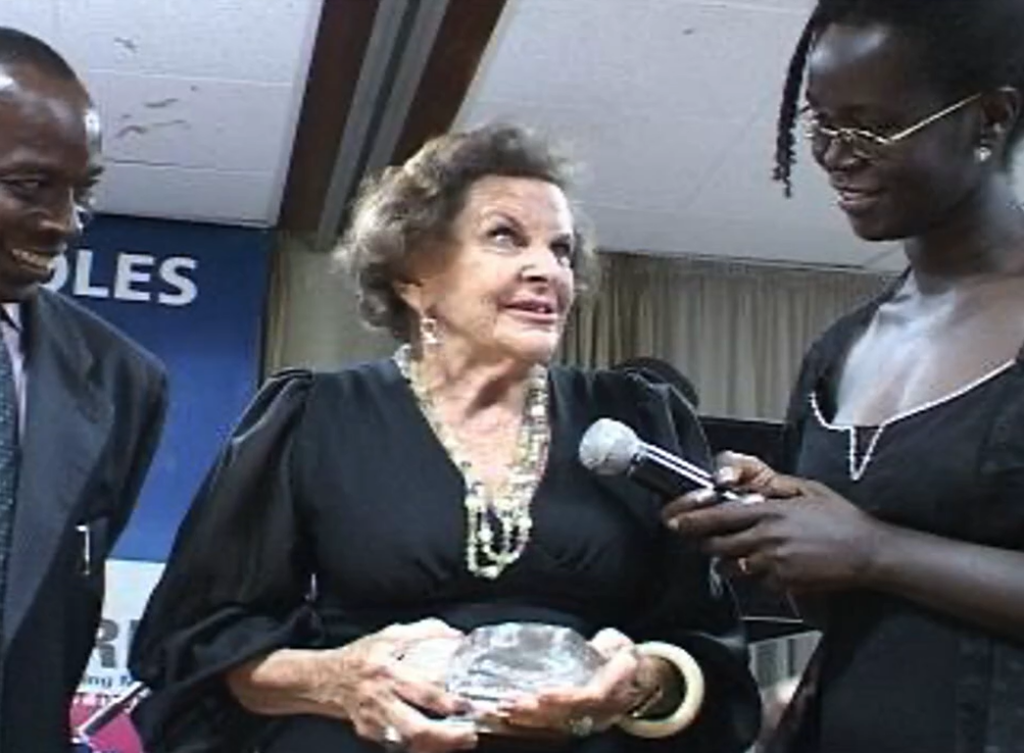
For Erica, who had arrived in Africa as a refugee in 1942 and whose architectural qualifications had initially gone unrecognised by the colonial authorities, the occasion held particular significance.
“A Lone Woman in a Forest of Men”
The award ceremony remains one of Rhodia’s treasured memories.
Photographs taken on the occasion show Erica, now an elderly woman, receiving the distinction in the presence of representatives of Kenya’s architectural community. By then, she was regarded as one of the country’s respected architectural figures, and her experience had made her a source of inspiration for younger generations.
During the ceremony, the chairman of the association described her in words that Rhodia would never forget: “A lone woman in a forest of men.” The expression referred to Erica’s professional journey in a field that had long been dominated by men.
For Rhodia, these words capture one of the defining aspects of her mother’s life: her ability to pursue her vocation and build a career in an environment where women still had relatively few opportunities to establish themselves professionally.
Erica was never afraid to express her opinions, and she retained her interest in her profession well into old age. Young people aspiring to become architects would sometimes turn to her for advice and guidance, drawing on her extensive experience.
The distinction she received in 2003 represented recognition of a professional life spanning several decades.
Erica Mann’s Final Years
Erica Mann passed away in 2007, approximately one month before her 90th birthday. In one of the final photographs presented by Rhodia, Erica appears as an elderly woman, yet she retains the same determined expression that had characterised her throughout her life.
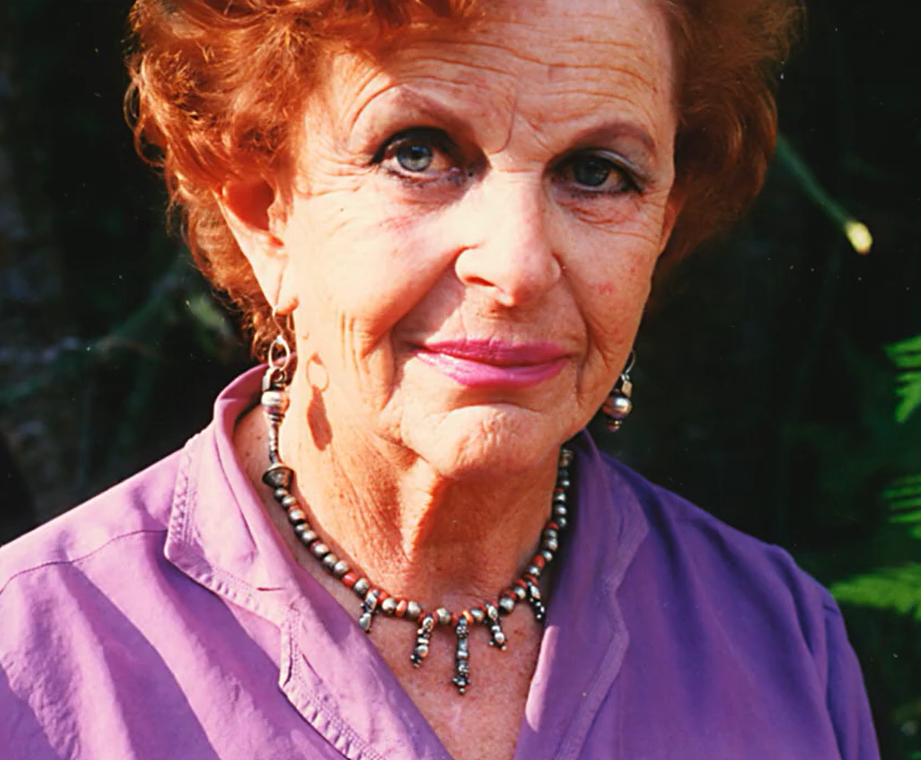
Rhodia describes her mother through three qualities that, in her view, defined her personality: intelligence, determination and an enduring ability to look towards the future.
“She never looked back,” she says, referring to the way her mother faced the difficulties and changes she encountered throughout her life.
Yet Erica’s story does not end with her passing.
A Box of Pastels Preserved Since Her Youth
Among the possessions Erica left to her daughter was a box of coloured pastels that she had owned since her student days in Paris, before the outbreak of the Second World War. It was one of the few things she had managed to preserve throughout her years as a refugee.
When she left Romania, Erica had been allowed to take only one piece of luggage, in which she had packed some drawing materials, her traditional Romanian costume and a handful of other personal belongings.
The pastels accompanied her on her journey through Europe and Africa, surviving the years spent in refugee camps, the successive moves and all the changes that had shaped her life. After her mother’s death, Rhodia wondered what she should do with them. Although she was a designer herself, she did not consider herself an artist and wanted the pastels to go to someone who could put them to good use.
She thought it would be fitting to give them to a young Kenyan artist with a passion for working in pastels. The search took approximately a year. Eventually, she met a young Maasai artist named Leamech, whom she invited to her home, together with a few friends.
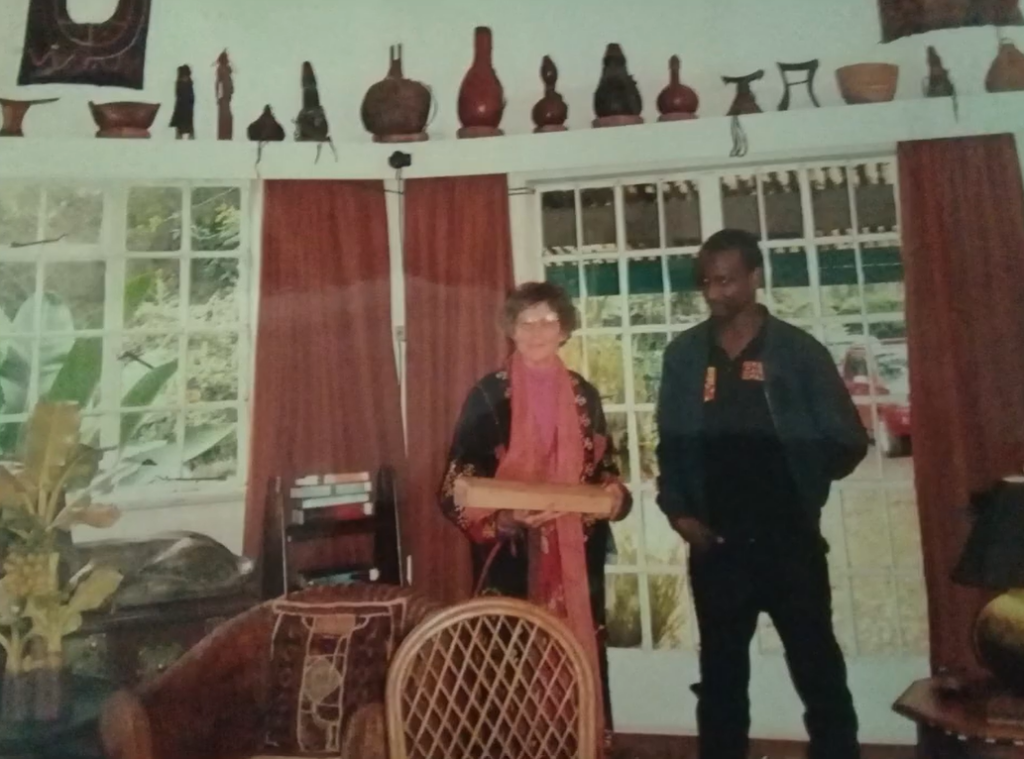
There, she presented him with the box of pastels that had once belonged to her mother. For Rhodia, the gesture held profound significance. The drawing materials Erica had treasured since her youth, carrying them across continents and through decades of her life, were now in the hands of an artist from a new generation. She was convinced that her mother would have been delighted to know that an object so closely connected to her passion for art had found a new owner.
A Story That Lives On Through Those Who Discover It
Erica Mann was an artist, illustrator, designer, craftswoman, town planner and philanthropist. In the final years of her life, she had also received official recognition from Kenya’s architectural community.
For her daughter, these achievements form the portrait of a woman she came to know more fully only after her death, when she began exploring the family archives.
“What more can I say? What an extraordinary woman!” Rhodia concludes.
Erica Mann’s story begins in Bucharest in 1917 and unfolds across Paris, wartime Europe and East Africa. It is the story of a woman who was forced to leave her homeland but who succeeded in pursuing her profession and contributing to the development of the country where she found a new home.
The box of pastels, preserved for almost seven decades, perhaps offers the most beautiful illustration of this continuity: the very materials Erica had used to develop her artistic talent in her youth eventually came to inspire another artist in Kenya.
***
Rhodia Mann’s documentary, A Woman of Vision – The Story of Erica Mann, is remarkable precisely because of its simplicity. Without elaborate reconstructions or visual effects, Rhodia tells her mother’s story through family photographs that have survived the passage of time, recalling the events and memories behind them.
Her approach is reminiscent of a time when families would sit together in quiet moments, turning the pages of old photograph albums, while memories came to life through the voices of those who had experienced them.
Beyond the biography of architect Erica Mann, the documentary narrated by Rhodia becomes a personal account of a family whose history unfolded between Romania and Kenya, against the backdrop of some of the most significant transformations of the twentieth century.
***
More than eight decades have passed since Erica Mann left Romania, the country where she was born and which she never ceased to regard as part of her identity.
Life took her far from the Bucharest of her childhood and the Paris where she had studied architecture, eventually leading her to East Africa, where she would build a new life and spend most of her professional career.
In Kenya, her name remains associated with the history of architecture and town planning, with projects dedicated to local communities and with initiatives through which she sought to improve people’s lives.
In Romania, however, her story remains largely unknown. I find myself thinking back to my first encounter with Nairobi, in December 2019, when I travelled from one end of the city to the other without knowing anything about Erica Mann. Now, having discovered her story and met her daughter, Rhodia, I see the places I pass through differently. I know that somewhere in the history of this extraordinarily complex city lies the work of a woman born thousands of miles away, in Romania. I even know the area where Erica and Igor Mann first settled when they arrived in Kenya: Athi River.
I am grateful to Rhodia Mann for preserving her mother’s documents, photographs and memories, and for the generosity with which she shares her story.
I am equally grateful to my friend Andrei Mihalca, through whom I first learnt about the Mann family and had the opportunity to meet Rhodia.
Through this article, I hope Erica Mann’s name will reach as many Romanian readers as possible. Her story deserves to be known in the country where it began.
*The images accompanying this article come from the Mann family archives and have been reproduced as screenshots from the documentary A Woman of Vision – The Story of Erica Mann, produced and narrated by Rhodia Mann.

Variațiuni pe aceeași temă (mai mult sau mai puțin)!

S-ar putea să-ți placă și

Sheldrick Wildlife Trust: un colț de rai pentru elefanții orfani

NAIROBI – GHID de CĂLĂTORIE (pe scurt)
